Introduction: When Data Isn’t Enough
For over a decade, marketing has been driven by data obsession. Click-through rates, conversions, impressions, and customer lifetime value have become the sacred metrics of modern marketing. Dashboards pulse with real-time analytics, and decision-making often feels more like a numbers game than a creative pursuit.
Yet, in every boardroom, every campaign brainstorm, there comes a moment when data runs out of answers. At that intersection of uncertainty and possibility, a different force often takes the lead, human intuition. It’s the gut instinct that tells a strategist, “This idea will work,” or convinces a creative team that a certain message feels right long before testing proves it.
In an era dominated by algorithms, it might sound paradoxical to even talk about intuition as a metric. But as marketing becomes increasingly automated, intuition is emerging as a rare differentiator. It represents the deeply human ability to synthesize patterns, emotions, and subconscious signals — elements that no dashboard can fully quantify.
The key question is no longer whether intuition matters. It’s how we can measure the unmeasurable, and turn intuition from an art form into a strategic, trackable advantage.
1. The Paradox of Intuition in a Data-Driven World
Modern marketing has never been more measurable, yet never more unpredictable. According to Gartner’s 2024 CMO Spend Survey, nearly 78% of marketing leaders rely on analytics to guide strategic decisions. However, the same report found that six in ten successful campaigns ultimately pivoted based on a gut decision that contradicted the data.
That tension captures the reality of marketing in 2025: data describes what happened, but intuition predicts what’s next.
Steve Jobs once remarked, “Intuition is a very powerful thing, more powerful than intellect.” In business contexts, this doesn’t mean abandoning data; it means using intuition as a bridge between analysis and action. Where data offers the “what,” intuition interprets the “why.”
For example, analytics can reveal that engagement on short-form videos has surged by 45%. But intuition is what helps a creative director sense why audiences are drawn to those stories, perhaps because they crave authenticity, rhythm, or humor in a noisy digital landscape.
In short, data helps us optimize the past. Intuition helps us anticipate the future.
2. When Analytics Fail and Intuition Wins
If intuition sounds abstract, its impact on real-world results is anything but.
Consider the infamous Pepsi Kendall Jenner campaign of 2017. It checked every analytical box, pre-launch testing, focus groups, sentiment models, yet it failed spectacularly. Why? Because while the data validated mechanics, no one paused to ask whether the message felt right in a politically charged cultural moment.
Now, compare that with Nike’s Colin Kaepernick “Dream Crazy” campaign in 2018. Data warned of controversy and possible boycotts. Yet Nike’s leadership trusted a deeper instinct, that cultural relevance and purpose-driven storytelling would outweigh short-term backlash. The result: Nike’s online sales jumped 31% within days, and brand loyalty strengthened across core segments (Edison Trends, 2018).
This duality reveals an essential truth: when data and intuition align, marketing becomes unstoppable. But when data dominates without empathy, even the most sophisticated analytics can lead to tone-deaf execution.
Intuition fills the gap between metrics and meaning, and that’s exactly where most brands lose their human connection.
3. The Science of Intuition: More Than Just a Feeling
For years, intuition was dismissed as soft skill, something mystical or purely emotional. But modern neuroscience has begun to decode its mechanics.
Research by the Max Planck Institute and the University of Iowa shows that the brain often makes accurate decisions milliseconds before conscious reasoning kicks in. These are subconscious computations based on experience, pattern recognition, and stored sensory cues effectively, a lightning-fast form of data processing.
In psychology, this is referred to as “rapid cognition.” The same phenomenon occurs when a creative strategist instantly knows a concept will resonate, or when an experienced marketer senses a campaign’s timing is off without checking reports. These aren’t random guesses; they’re the result of compressed expertise. thousands of micro-patterns learned over years, surfacing as a gut reaction.
In marketing terms, intuition is the human brain’s predictive algorithm, powered by experience rather than equations. The only difference is that we’ve never found a reliable way to measure it until now.
4. Designing Frameworks to Quantify Intuition
So, how do we begin to treat intuition as a measurable component of marketing performance? Forward-thinking organizations are experimenting with hybrid frameworks that blend instinct with analytics — frameworks we might collectively call the Intuition Index.
Below are three emerging models for quantifying and refining intuitive intelligence within teams:
a. The Confidence Index
Before campaign launches, key stakeholders record their intuitive confidence level in each proposed idea, a 1–10 rating of how strongly they “feel” about its success. After execution, these scores are compared against actual performance metrics. Over time, correlations begin to appear. Some individuals or teams consistently demonstrate high intuitive accuracy. This becomes a measurable indicator of intuitive calibration, a form of decision intelligence.
b. The Divergence Score
The Divergence Score measures how often a successful campaign deviated from the original data recommendation. If intuition-led divergences consistently outperform data-pure strategies, this score highlights where instinct is adding measurable value. It also helps leadership identify contexts where intuition thrives, such as early-stage creative ideation or emerging trend prediction.
c. The Reflex Loop
Finally, integrating AI-driven emotional analytics closes the feedback loop. Tools that analyze facial micro-expressions, tone shifts, and real-time sentiment data can validate whether an intuition-based decision aligns with audience emotion. When the data later supports the instinct, it strengthens intuitive credibility across the organization.
When these three elements work together – confidence, divergence, and reflex feedback – intuition evolves from a private hunch into a quantifiable corporate skillset.
5. The Rise of Hybrid Intelligence: Human + Machine
The integration of artificial intelligence into marketing decision-making has been both transformative and paradoxical. On one hand, AI democratizes prediction – anyone can forecast performance, segment audiences, or generate copy at scale. On the other hand, this very accessibility makes true differentiation harder than ever.
What separates high-performing marketing organizations today isn’t access to algorithms – it’s how they combine machine efficiency with human discernment.
Accenture’s AI + Human Synergy Report (2024) found that companies blending algorithmic insights with human judgment achieved 22% higher creative effectiveness and 34% stronger brand equity growth than those relying on AI alone.
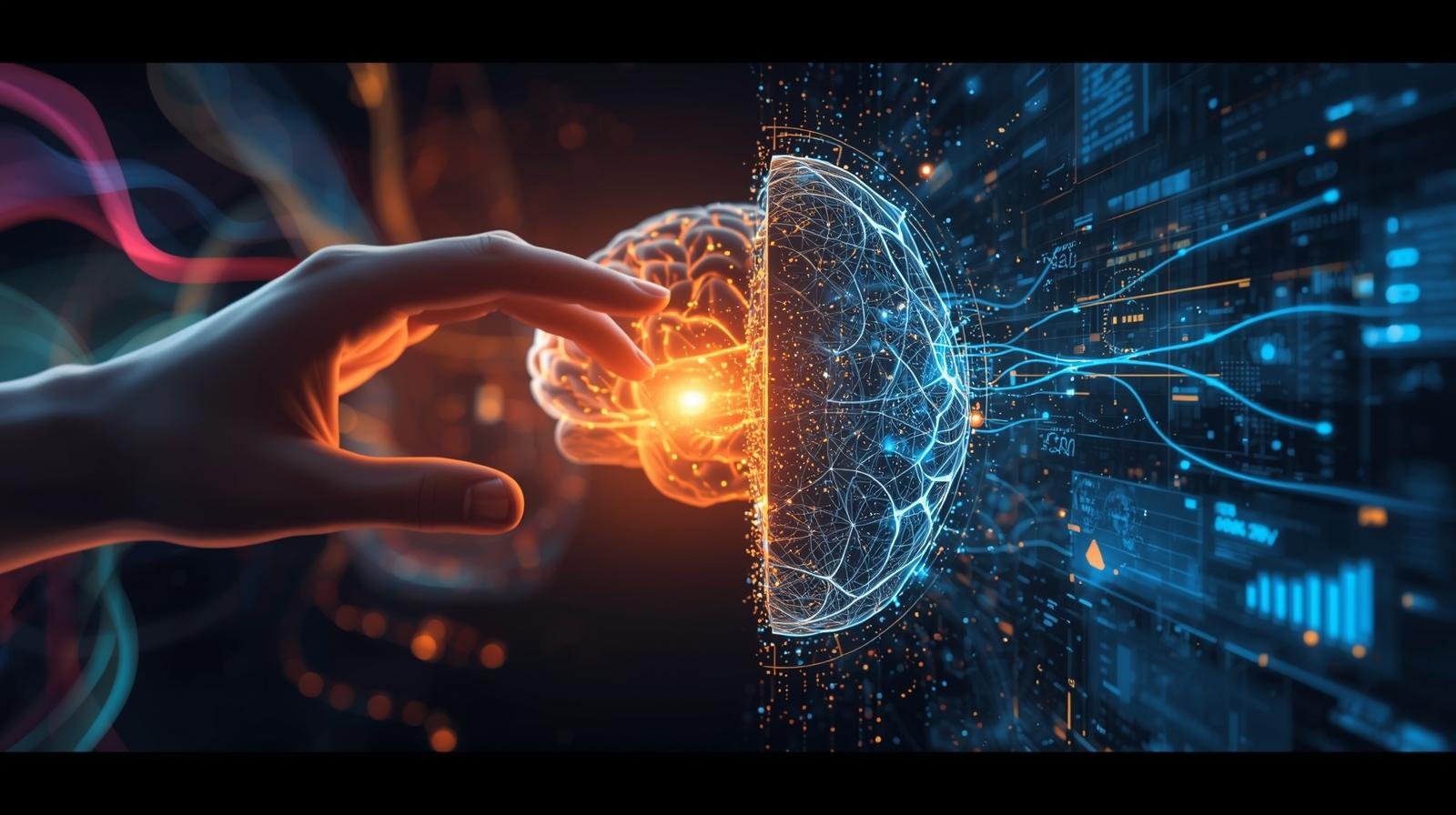
This is what we call Hybrid Intelligence – where human intuition filters, interprets, and enhances AI-driven data. Machines predict probabilities; humans interpret meaning. Together, they form a marketing intelligence that is both analytical and empathetic.
A future-ready marketing workflow might look like this:
AI detects a spike in a micro-trend. A strategist senses which cultural moment it aligns with. The creative team translates that intuition into storytelling. The result? Relevance, speed, and resonance – all powered by intuition and intelligence in harmony.
6. Cultivating Intuitive Intelligence in Teams
If intuition is measurable, can it also be trained? Absolutely – but not through typical analytics workshops. Intuition grows in environments that value curiosity, psychological safety, and reflective thinking.
Forward-thinking CMOs are already taking deliberate steps to build intuitive cultures:
Cross-disciplinary exposure: Encouraging marketers to explore psychology, art, behavioral economics, and technology to expand pattern recognition capacity.
Reflective retrospectives: Conducting post-campaign reviews that analyze not only outcomes but also why certain decisions felt right or wrong.
Creative sandboxing: Allocating time for experimentation without KPIs, where creative instincts can evolve free from data constraints.
AI collaboration training: Teaching teams how to interpret and challenge AI recommendations with human reasoning instead of default acceptance.
Intuition, like any skill, strengthens with use and weakens with neglect. When nurtured intentionally, it becomes a shared organizational advantage – not just a personal trait.
7. The Future of Measurement: Beyond Metrics, Toward Meaning
Marketing measurement is evolving from dashboards to dimensions. As emotional analytics, neuroscience, and machine learning converge, new forms of “empathic measurement” are emerging.
IBM’s Emotion AI models, for instance, can now analyze tone and sentiment in communications with 87% accuracy. Platforms like Neurons Inc. and Realeyes use EEG and eye-tracking data to measure subconscious engagement. Even Coca-Cola’s creative labs are experimenting with emotional resonance dashboards to quantify how consumers feel about a message – not just how they react to it.
This evolution suggests that tomorrow’s marketing leaders won’t simply analyze data points; they’ll interpret human signals – merging intuitive perception with measurable patterns. The result will be more authentic, emotionally intelligent marketing strategies that move beyond transaction metrics toward meaning metrics.
8. Measuring the Unmeasurable: A New Mindset
Ultimately, the goal isn’t to replace intuition with data, or vice versa. It’s to integrate both into a more holistic understanding of human behavior. Metrics tell us what happened. Intuition tells us why it happened. When both operate in tandem, marketing becomes both scientific and soulful.
As automation continues to accelerate, intuition may become the most valuable currency in marketing. It’s the one thing machines can’t replicate – yet it can guide how machines are used. The most visionary marketers of the next decade won’t just interpret dashboards; they’ll interpret the invisible currents beneath them – the patterns, instincts, and emotions that drive real human behavior.
That’s the essence of the Intuition Index: a mindset shift that sees intuition not as a mysterious gift, but as a measurable, improvable form of intelligence.
The Next Evolution of Marketing Intelligence
The age of data-driven marketing is giving way to the age of decision intelligence – where human intuition and machine precision co-create outcomes neither could achieve alone.
In this new landscape, intuition isn’t the opposite of analytics. It’s the next frontier beyond it – a cognitive layer that adds context, creativity, and conscience to information.
The brands that thrive in this future will not just chase clicks or optimize funnels. They’ll learn to listen – not only to what the data says, but to what their intuition whispers. Because when all else is automated, it’s the human sense of meaning that will set great marketing apart from merely efficient marketing.
And that’s not just measuring the unmeasurable – that’s mastering it.